 2027 Aspen conference:
Cosmological Signals from the Dark Ages to the Present
2027 Aspen conference:
Cosmological Signals from the Dark Ages to the Present 

In recent decades, the biggest discoveries in physics have come from astronomy (dark matter, dark energy, gravitational waves, and black holes). In my field of 21-cm cosmology (studying early cosmic epochs using radio waves from hydrogen), I have highlighted potential discoveries about the nature of dark matter, which would represent another example of deriving fundamental physics from astronomical observations.
Astronomers have been searching for a radio-wave signal that is
predicted to be a sign of the formation of the first stars in the
early Universe. The first (and thus far only) claimed detection of
this signal was in 2018, obtained with the EDGES radio telescope. The
signal had a much larger amplitude than expected, presenting a
puzzle. I realized that this surprising signal can be explained by
combining two factors: the first stars, and dark matter. The first
stars in the universe turned on the radio signal as expected, while
the dark matter collided with the ordinary matter and cooled it
down. Extra-cold material naturally explains the strong radio
signal. If true, this would have enormous implications; it would be
the first direct clue about the nature of the mysterious dark matter
that makes up most of the matter in the Universe. For example,
physicists expect that dark matter would most likely be made up of
heavy particles, but this explanation of the EDGES signal indicates
low-mass particles.
Caution is needed, since the EDGES
measurement is the first of its kind, and it is very difficult to
completely clean out the effect of the bright emission from our own
Galaxy. Independent confirmation is being attempted, and the first
experiment that reached comparable sensitivity (SARAS3) disfavored the
EDGES result (at only a moderate 2 sigma statistical
significance). Much more information is expected within a few years. I
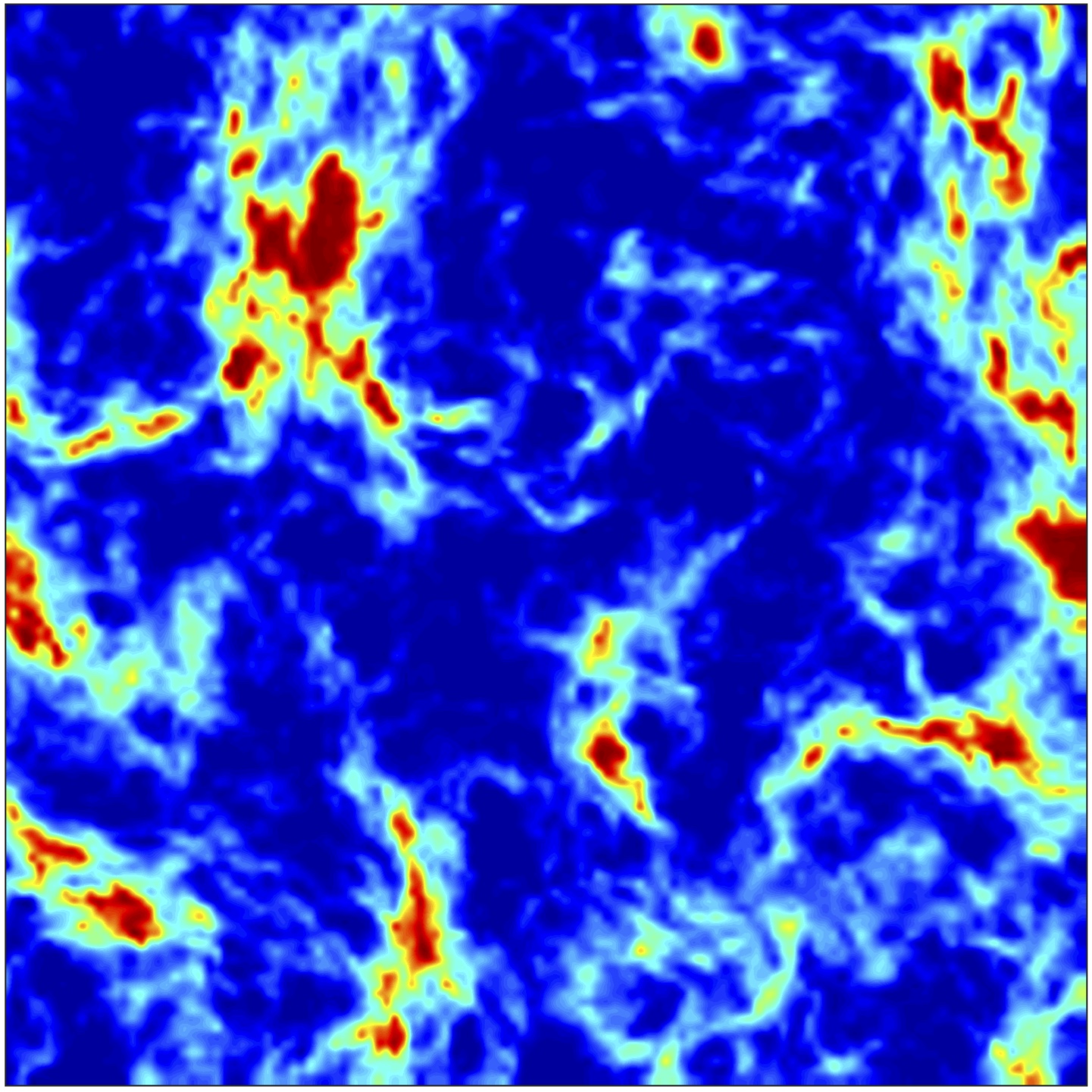
predicted that the dark matter may have produced a specific pattern of
radio waves on the sky (the colorful image above or to the left of
this text is an example), which can be detected with a large array of
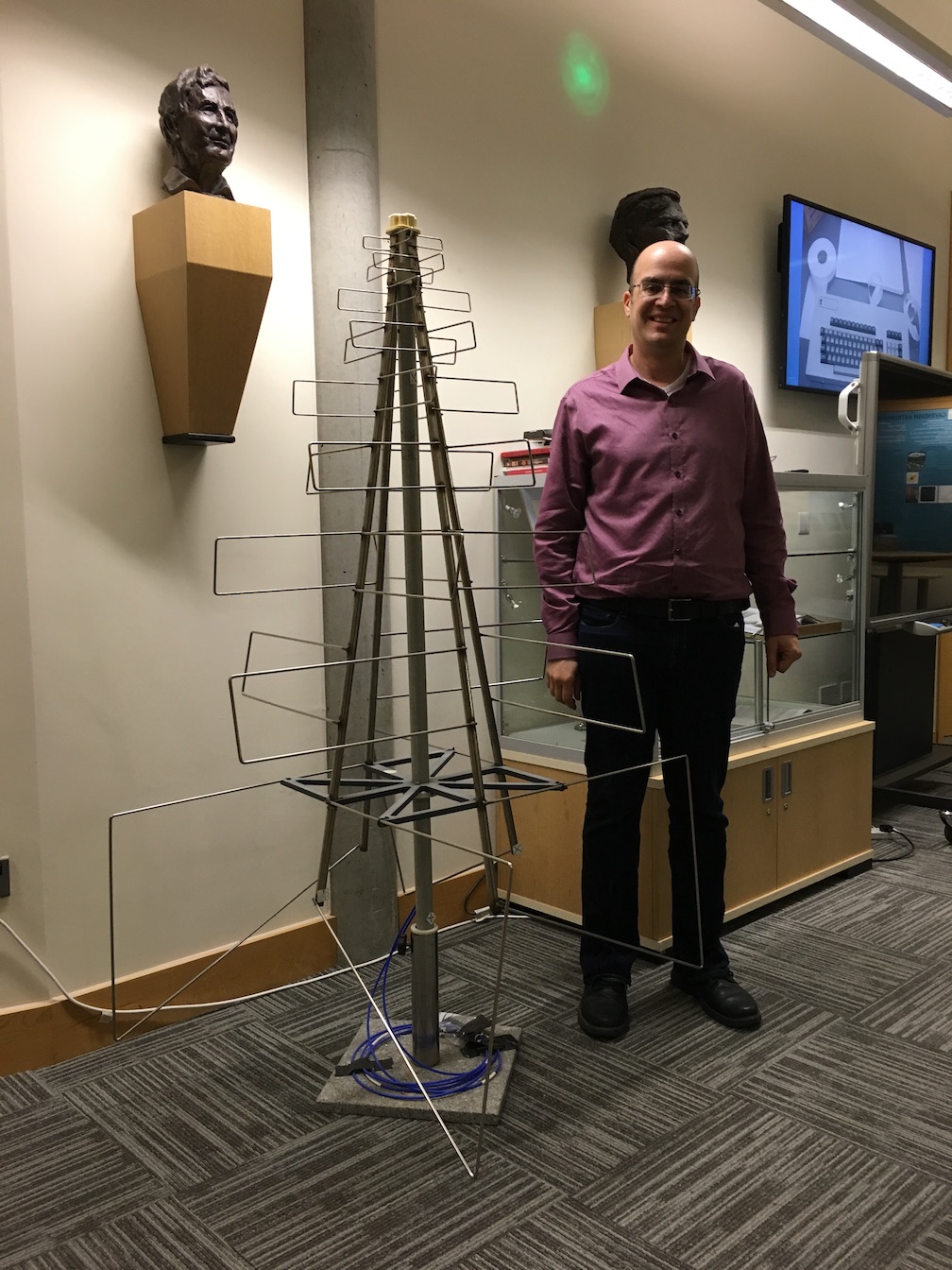
radio antennas. One such array is the Square Kilometre Array (SKA),
the largest radio telescope in the world, now under construction (the
second image shows me next to an SKA antenna prototype, at Cambridge
University). More info, audio/video, and links
available here.
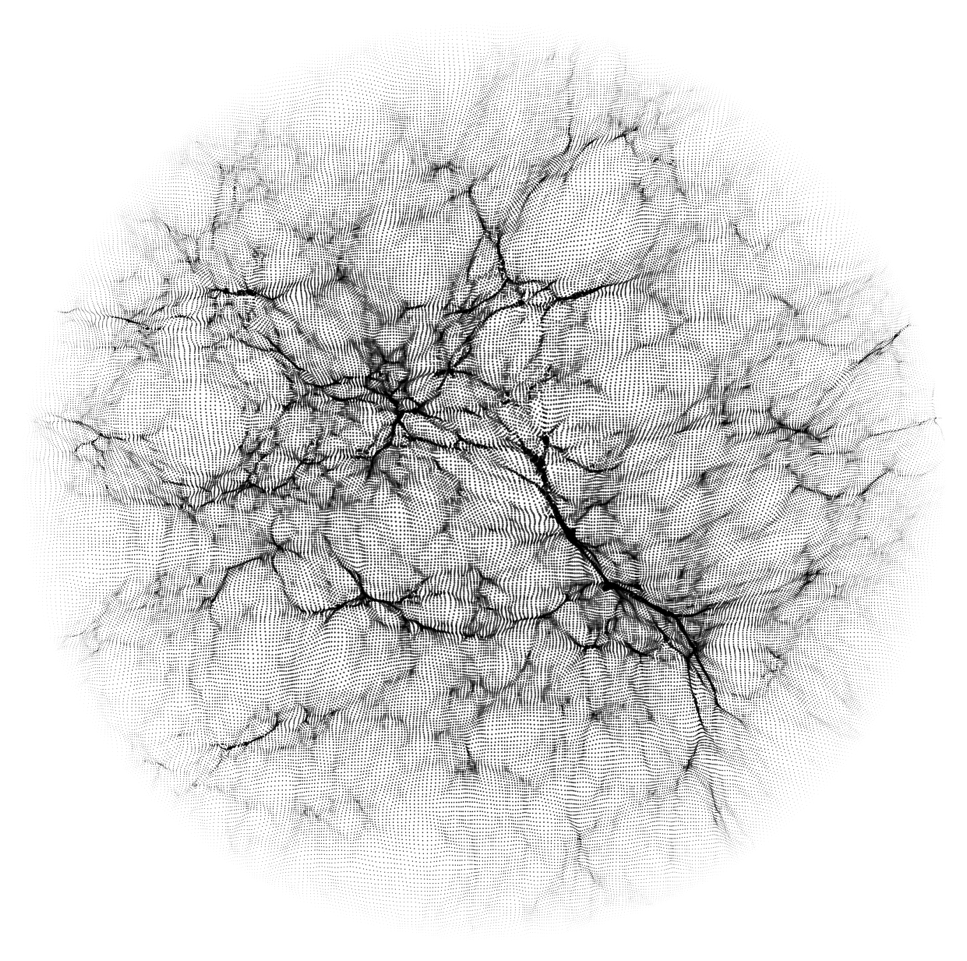
Within the standard picture of cosmology, my colleagues and I have recently predicted a novel signature in the radio signal. During cosmic dawn (the era of the formation of the first stars) as well as the cosmic dark ages (the era just before), computer simulations predict that dark matter throughout the Universe was forming a cosmic web of dense filaments (see the third image), which would later help form stars and galaxies. The abundance of these filaments depends on, and thus can help illuminate, the unknown properties of dark matter, but the filaments cannot be seen directly since they occur on spatial scales that are too small. However, the dark matter pulled in hydrogen gas and caused it to emit intense radio waves. The cumulative effect can be detected with radio antennas that measure the radio intensity on the sky; the clumping affects both the mean intensity and the spatial fluctuations. The latter is a promising target for the SKA mentioned above. Such measurements could be very significant for the scientific understanding of dark matter. In the present Universe, dark matter has had billions of years to interact with stars and galaxies, making it more difficult to decode its properties. In contrast, the pristine conditions in the early Universe offer potentially a much cleaner laboratory. More info and links available here.
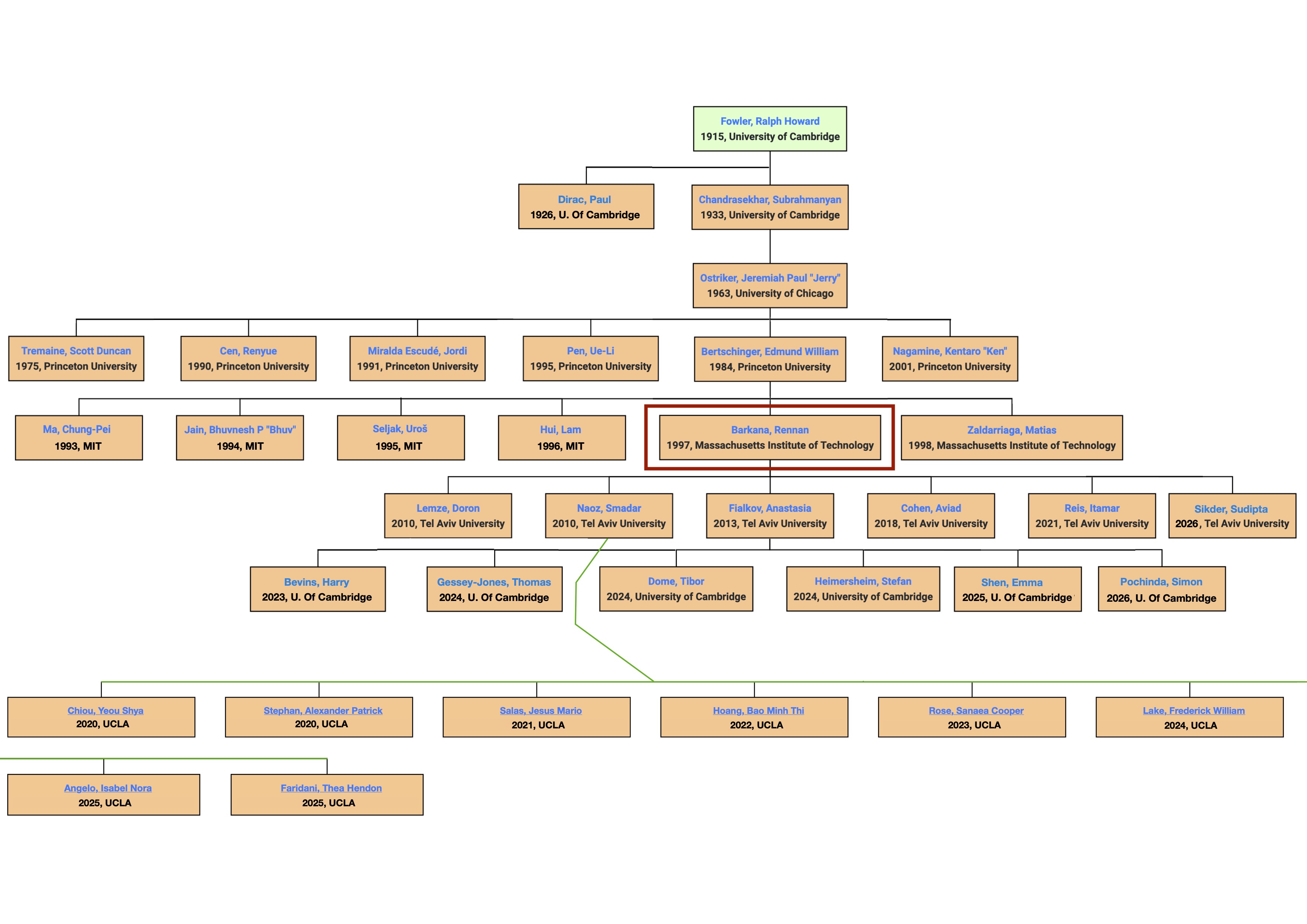
This shows my academic
tree (based on Ph.D. supervision), including my academic
ancestors (going back 4 generations), and my academic
descendants (20 total, going forward 2 generations). Also
included are some of my academic brothers as well as some of my
academic uncles, and one great-great-uncle. Based mainly
on The
Astronomy Genealogy Project. Going further back,
Ph.D. degrees were less common. Main research advisors and
approximate year of supervision go back from Fowler with
Archibald Hill (1915), Walter Morley Fletcher (1907), John
Newport Langley (1894), Michael Foster (1871), and then Thomas
Henry Huxley and William Sharpey (1859), with the former known
as Darwin's Bulldog (and also my direct academic ancestor, going back 9
generations).

1. Early 2020 TED-style talk (12.5 min) about "Mankind, the Universe, and Dark Matter"
2. Early 2018 explanation (4 min) on The First Stars (Hebrew with English subtitles)

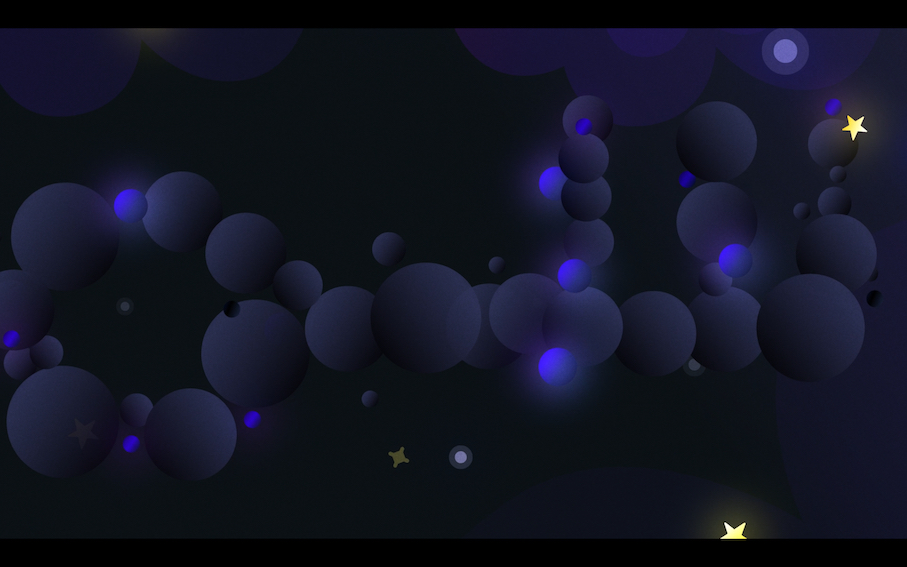
Dark Matter Revealed by the First Stars, (2.5 min, 2018): English version, Hebrew version
![[poster]](http://wise-obs.tau.ac.il/~barkana/daposter.jpg)
![[poster]](SignalsPoster.jpg)
![[poster]](poster-firstlight.jpg)
![[poster]](Aspen2010flyer.jpg)
![[poster]](Aspen06Ad.jpg)